





Electric Scooter Laws in the US
Are electric scooters street legal in your state? Use our interactive map to explore the latest laws regarding e-scooter legality, where they can be ridden, and helmet laws for both children and adults, then compare those rules with why electric scooters can be a cleaner short-trip option.
Our database includes local and state level laws for all 50 states — including a deep dive into California scooter regulations, the latest Detroit e-scooter rules, and city-specific updates for St. Petersburg scooter legality, Glendale scooter rules, and Jackson e-scooter laws — and over 300 individual cities.
Are electric scooters legal in your state?
Electric scooters are legal in the large majority of US states. In most states you do not need a license for a low-powered scooter (generally under 750W and 20 mph) because it is treated like a bicycle, though 6 states require a driver’s license, permit, or registration, and a few restrict or ban them. Rules for sidewalk riding, helmets, maximum speed, and minimum age vary by state and city. Find your state below, then open its page for the full local rules.
Electric scooter laws by state (all 50 states + DC)
The table below summarizes the legal status of electric scooters in every US state and Washington, DC. Click any state for detailed rules on licensing, helmets, speed limits, and where you can ride.
| State | Legal status | Summary |
|---|---|---|
| Alabama | Legal (License Required) | Class B restricted motorcycle license required. Helmets are required for all riders. Operators must be at least 14 years old to apply. |
| Alaska | Legal (License Required) | Statewide, electric scooters operators are required to be at least 14 years old and have an M2 class motorcycle license. Operators under the age of 18 must wear a helmet. |
| Arizona | Fully Legal | Electric scooters can be ridden anywhere a bicycle can go, including sidewalks and bicycle lanes. Helmets are not required statewide but are currently required for any riders under the age of 18 in Tucson, Sierra Vista, Yuma county, and Pima counties. |
| Arkansas | Fully Legal | Electric scooters have to abide by the same laws as a bicycle. Operators must be at least 16 years old, and that the scooters not be allowed to move at a speed above 15 mph. |
| California | Legal (License Required) | Electric Scooters are legal but limited to speeds at or below 15mph. A valid driver's license or learners permit is required. A helmet is also required for any riders under the age of 18. |
| Colorado | Fully Legal | Electric scooters are governed by the same rules as electric bicycles. They must be driven in the street and have a max speed of 20 MPH. Operators must be at least 16 years old and any riders under the age of 18 are required to wear a helmet. |
| Connecticut | Fully Legal | Electric scooter riders share the same rights, privileges and duties that currently exist for bicycle riders. Operators must be at least 15 years of age. Scooters are not allowed to be driven on sidewalks. All riders are required to wear a helmet. Scooters are limited to a speed of 20 mph. |
| Delaware | Fully Legal | Delaware legalized low-speed electric scooters (15 mph or under) with HB 114 (signed Aug 2025). Riders must be 14+. Helmet required under 18. No license needed. No sidewalk riding. Rentals not permitted. |
| District of Columbia | Fully Legal | Electric scooters are legal in Washington D.C. Operators must be 16 years or older to and are required to wear a helmet if under the age of 18. They are not permitted on sidewalks. |
| Florida | Fully Legal | Electric Scooter riders have the same rights and responsibilities as bicyclists. Scooters are not required to have a valid driver license. Riders under the age of 16 are required to wear a helmet. |
| Georgia | Fully Legal | Electric scooters are allowed on bike paths, bike lanes, and on roads with a speed limit of 35 mph or less if no bike lane or path is available. Riders must be at least 15 years old and are required to wear a helmet. \n |
| Hawaii | Fully Legal | In Hawaii, electric foot scooter share the same rights as bicycles. All riders under the age of 16 must wear a helmet. Scooters are not allowed to be ridden on sidewalks. Lamps and reflective material are required when operated from the hours of dusk to dawn.\n |
| Idaho | Not Officially Legalized | Idaho has no dedicated statewide electric scooter law. E-scooters are not banned but not explicitly authorized. Regulation is primarily at the municipal level (Boise, Idaho Falls). |
| Illinois | Fully Legal | Low-speed electric scooters (under 100 lbs, 20 mph) are legal under PA 103-0899. No license required. Riders must be 18+. Municipalities must opt in to allow use. |
| Indiana | Fully Legal | Electric scooters have the same rights and responsibilities as a bicycle. You can ride them in the street and on bike paths, and don't need insurance or a license. They are not legally considered motor vehicles. Helmets are required for riders under 18 years old.\n |
| Iowa | Fully Legal | Proposed bill to treat scooters as bicycles, allowing them on roads, sidewalks, and bike-paths. A license is not required. There is no statewide requirement for helmet use. |
| Kansas | Fully Legal | Electric scooters are legal to ride and must follow the same rules as cyclists. |
| Kentucky | Fully Legal | Electric scooters are treated the same as bicycles under Kentucky law. Operators must be at least 16 years of age and cannot ride durring the period from one half hour after sunset to one half hour before sunrise. They are not considered motor vehicles and a license is not required. There are no statewide requirements for helmets.\n\n |
| Louisiana | Fully Legal | Electric (low-speed) scooters are allowed on sidewalks, bicycle paths, and highways. They are not considered motor vehicle. Any riders under the age of 17 must wear a helmet. Riders are not required to have a license.\n |
| Maine | Legal (License Required) | Electric scooter riders must be at least 16 yers old and have a valid driver's license to operate. Helmets are not required by state law. |
| Maryland | Fully Legal | Electric scooters are legal in Maryland and share the same rights and responsibilities as bicycles. Any riders below the age of 16 must wear a helmet. Scooters cannot exceed 20 MPH. |
| Massachusetts | Legal (Heavily Regulated) | Electric scooters require a valid driver's license. Helmets mandatory for ALL riders. Max 20 mph. No riding after sunset. No sidewalk riding. One of the strictest states. |
| Michigan | Fully Legal | Electric scooters are legal on public streets for anyone over the age of 12 years old. No license is required. Helmets are required for riders under the age of 19. Scooters are limited to 25 mph. They are not considered motor vehicles. |
| Minnesota | Fully Legal | Electric scooters have the same rights and responsibilities as bicyclists. They are allowed on streets and highways without a driver's license and without the vehicle being registered, licensed, or insured. They are considered 'motor vehicles' under Minnesota law. An operator of a motorized scooter who is under age 18 must wear a helmet. A person must be at least 12 years old to operate on public streets and highways |
| Mississippi | Not Officially Legalized | Mississippi has no statewide electric scooter legislation. The DMV classifies scooters as 'Toy Vehicles' not eligible for road use. Individual cities may set their own rules. |
| Missouri | Legal (License Required) | Electric scooters can be operated on public streets and highways if the driver holds a valid license. A helmet is required for all riders. Scooters are considered a motor vehicle. |
| Montana | Fully Legal | Montana legalized electric scooters with HB 588 (effective Oct 2025). No license required. Helmet required under 18. Max speed 30 mph. Allowed where bicycles and mopeds operate. |
| Nebraska | Not Officially Legalized | Nebraska has no statewide electric scooter legislation. Regulation is handled by local municipalities. Omaha and Lincoln have pilot programs with their own rules. |
| Nevada | Fully Legal | Electric scooters are allowed on any roadway, bicycle lane, path or sidewalk at a speeds 15 mph or less. Electric scooters are not considered motor vehicles and operators are not required to have a drivers license. Operators must be at least 16 years of age. There are no statewide helmet laws. |
| New Hampshire | Legal (License Required) | Electric scooters are legal to ride on public roads and bicycle paths. Operators must be at least 16 years old but are not required to hold a valid drivers license. New Hampshire does require that the scooter be licensed. There are no specified speed limits or helmet laws. |
| New Jersey | Fully Legal | Electric scooter are regulated the same as bicycles in New Jersey. They are considered motor vehicles but operators are not required to have a valid driver's license. Helmets must be worn by any riders under the age of 17. Scooters can be driven on public roads and bike paths. \n |
| New Mexico | Not Officially Legalized | Proposed bill (linked below) would allow for the regulation of scooters under the same laws as bicycles. Helmets are required for riders under the age of 18. |
| New York | Fully Legal | - Legal to ride up to 20mph\n- Allowed on streets with posted speed limits under 30mph, but not on sidewalks\n- Must wear a helmet if under the age of 18\n |
| North Carolina | Fully Legal | Electric standup scooters are legal under SB 469. No license, registration, or insurance required. Riders must be 16+. Helmet required under 16. Max speed 20 mph. |
| North Dakota | Fully Legal | Electric scooters are classified the same as any other motorized scooters with top speeds less than 30 mph. User need to have a valid driver's license. The minimum age is 14 years or older. All riders need to have a helmet. |
| Ohio | Fully Legal | Electric scooters are legal to ride for anyone over the age of 16 years old. Electric scooters cannot go over 15 mph but are usable anywhere. Scooters are not considered motor vehicles. There are no statewide helmet or license requirements. |
| Oklahoma | Fully Legal | Scooters are legal to ride at speeds less than 25 mph on roads with speed limits at or below 25 mph. Operators must be at least 16 years old but are not required to have a license. There are no statewide helmet laws. |
| Oregon | Fully Legal | Electric scooters are allowed on streets, multi-use paths and in bike lanes. |
| Pennsylvania | Legal (Heavily Regulated) | Illegal to use on roads or sidewalks without proper registration. |
| Rhode Island | Fully Legal | Electric scooters are legal. No special license required. Riders must be 16+. Helmet required under 21. Sidewalk riding allowed at state level but some cities prohibit it. |
| South Carolina | Not Officially Legalized | South Carolina has no statewide e-scooter law. Most scooters fall under the EPAMD classification — no license required. Regulation is at the city level. |
| South Dakota | Legal (Heavily Regulated) | Electric scooters are classified as mopeds. All motor scooter operators must have a valid driver's license. No person under 18 years of age may ride a motor scooter unless wearing a helmet. Scooters do not have to be registered but must meet all federal highway safety standards. |
| Tennessee | Fully Legal | Electric Scooters are legal to ride under 15 mph. A helmet and license are not required. Operators must be at least 16 years old. Scooters are considered motor vehicles. |
| Texas | Fully Legal | Riders do not need a driver's license to operate an electric scooter. Scooters can be driven on roads or sidewalks. There are no statewide helmets laws. Scooters are considered motor vehicles.\n |
| Utah | Fully Legal | Electric scooters are considered motor assisted scooters and are available for ages 18 and above. Scooters can ride in areas where laws allow bicycles but cannot exceed 15 mph. A valid driver's license is not required. |
| Vermont | Not Officially Legalized | Vermont has no clear legislation for both electric scooters. Some cities are in their pilot programs to understand the impact of micro-mobility in their cities. |
| Virginia | Fully Legal | Electric scooters are allowed with: Top speed of 20 mph, Riders must be 14 years old or above (or supervised), Usability in highways with speeds below 25 mph \n\n |
| Washington | Fully Legal | Electric scooters cannot be driven on sidewalks but can go to most areas allowed for bicycles. Users must wear bicycle helmets and cannot exceed 20 mph. no driver's license required. |
| West Virginia | Not Officially Legalized | West Virginia has no specific statewide law for electric scooters. E-scooters are not classified as mopeds. No state-level registration or title required. Regulation falls to municipalities. |
| Wisconsin | Fully Legal | Electric scooters must not exceed a speed of 20 mph. Scooters can be ridden on the shoulder of roadways, bike paths, and sidewalks unless otherwise prohibited by a municipality. Electric scooters are considered motor vehicles. There are no statewide helmet laws. A license is not required. |
| Wyoming | Not Officially Legalized | While e-bikes have been legalized in Wyoming, there is no official guidance yet on electric scooters. |
Electric scooter law FAQ
Do you need a license for an electric scooter?
In most US states you do not need a license to ride a low-powered electric scooter (typically under 750W and 20 mph), because it is treated like a bicycle. A minority of states classify scooters as mopeds or motor-driven cycles and require a driver’s license, learner’s permit, or motorcycle endorsement. Check your state in the table above for its specific rule.
Are electric scooters street legal?
Yes, in the large majority of states electric scooters are street legal, usually allowed in bike lanes and on roads under a certain speed. Where they can be ridden (road, bike lane, or sidewalk) and at what maximum speed varies by state and city, and a handful of jurisdictions restrict or ban them. Find your state above for the details.
How fast can an electric scooter legally go?
Most states cap electric scooter speed at 15–20 mph on public roads and bike lanes, mirroring e-bike rules. The Levy Light (18 mph) and Levy Plus (20 mph) stay within the common 20 mph limit. The Levy Max reaches 28 mph, which is above that limit in many states, so check your state's rule above and ride at or below the local limit.
Do you need insurance or registration for an electric scooter?
Most states do not require registration or insurance for a personal low-powered electric scooter, again because it is treated like a bicycle rather than a motor vehicle. States that classify scooters as mopeds may require registration. Your state’s detail page covers any registration, insurance, or age rules.
Are helmets required to ride an electric scooter?
Helmet laws vary. Many states require a helmet only for riders under 16 or 18, while some require none for adults and a few require them for all riders. Regardless of the law, a helmet is strongly recommended. See your state above for its helmet rule.
Can you ride an electric scooter on the sidewalk?
It depends on the state and city. Some allow sidewalk riding (often outside business districts), while many require you to use the road or a bike lane, and dense cities like New York generally prohibit sidewalk riding. Check your state and city rules before riding on a sidewalk.
A street-legal scooter for most US cities
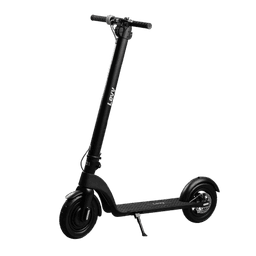
The Levy Light and Levy Plus top out at 18–20 mph, keeping them within the common 20 mph limit in most states, and at 27–30 lbs they fold to come indoors. Compare models on the specs page, estimate range with the range calculator, or see financing from $47/month.
Want a model recommendation to go with the rules? Our sibling site Electric Scooter Guide publishes independent reviews and buying guides for 4,000+ scooters.
Laws change frequently and this summary is for general information only — always confirm current state and local regulations before riding.